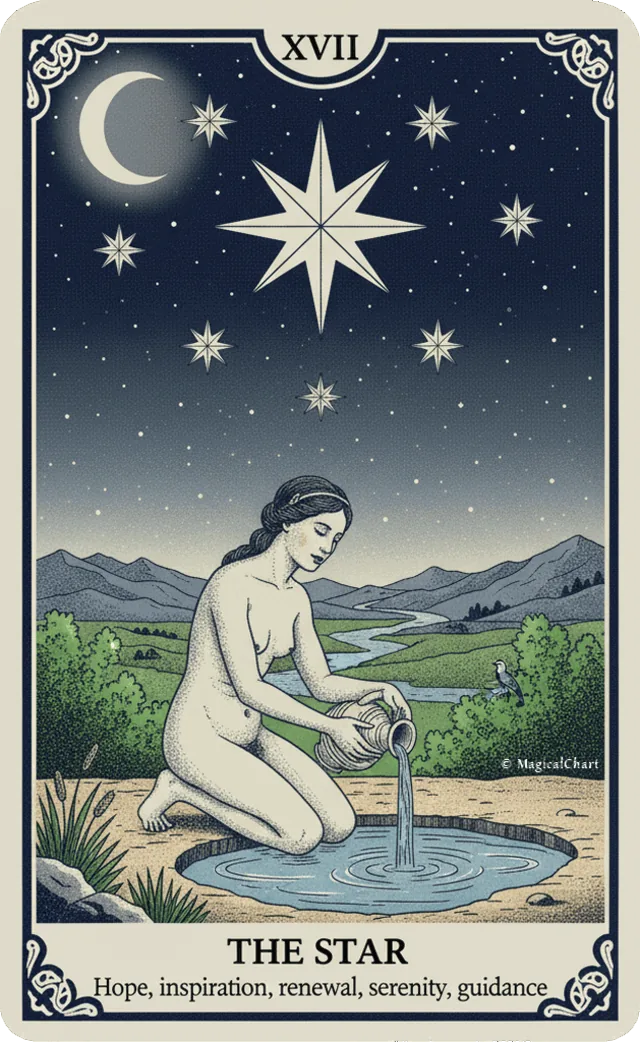
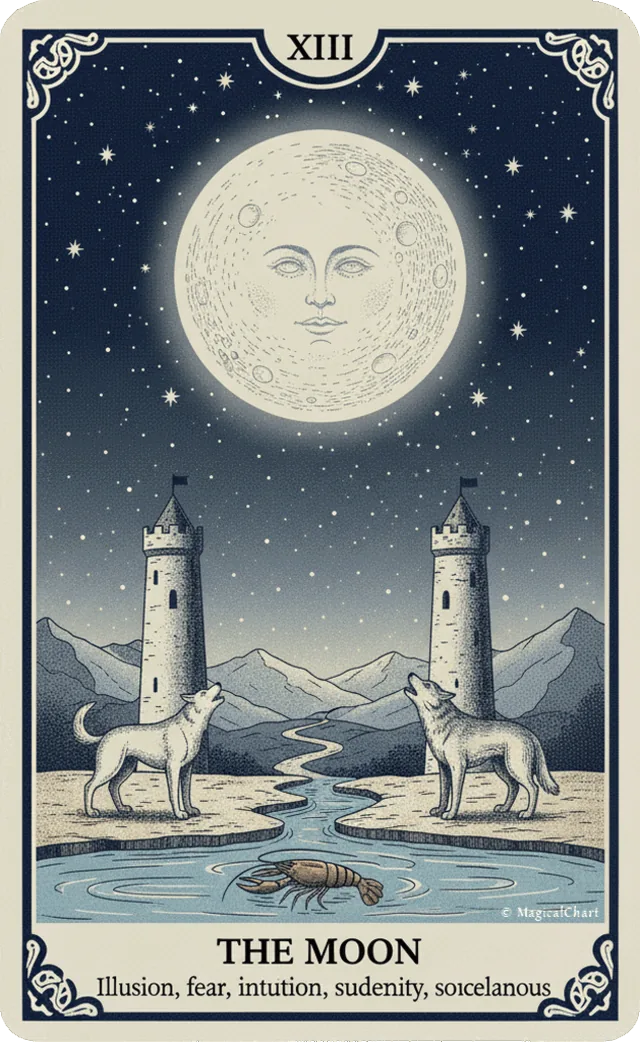
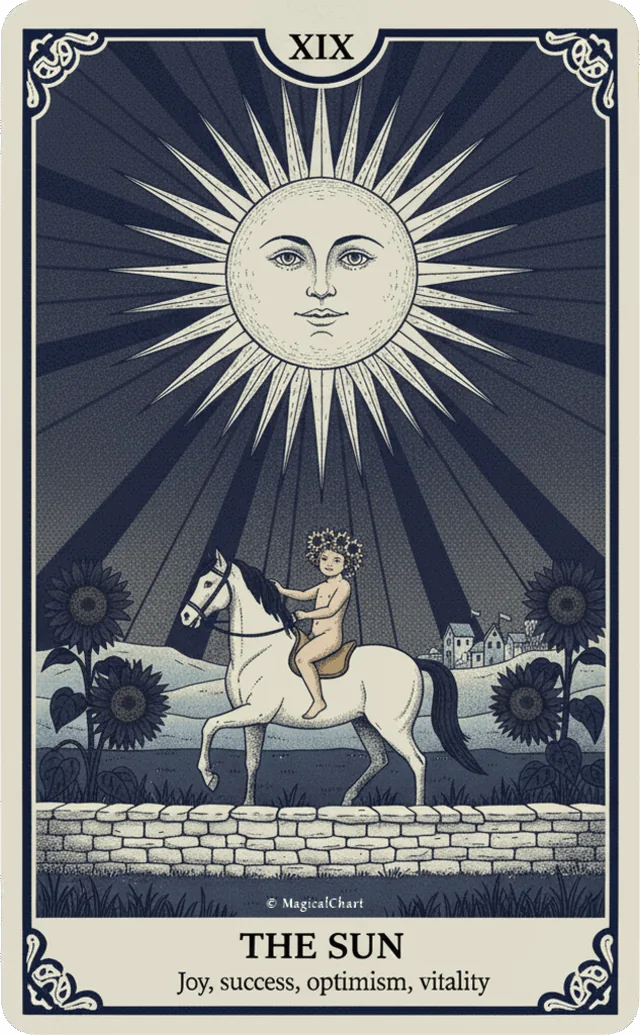
The art of reading cards for guidance — and why it's a far bigger family than just tarot.
Three cards drawn from a tarot deck — one branch of cartomancy ✦
Cartomancy is the practice of reading cards for insight, reflection and guidance. The word comes from the French cartomancie — literally "divination by cards." If you've ever had your tarot read, you've experienced one branch of cartomancy. But the family is much wider than most people realise.
A common confusion: people use "tarot" and "cartomancy" as if they're the same thing. They're not. All tarot is cartomancy, but not all cartomancy is tarot. Cartomancy is the whole tradition of card reading; tarot is simply its most famous deck. Here are the main forms:
The best-known system: 22 Major Arcana (life's big archetypes) and 56 Minor Arcana across four suits. Rich, structured and ideal for deep, layered readings.
Free-form decks with their own themes and number of cards — no fixed structure. Each oracle deck speaks in its own voice, giving direct, intuitive messages rather than a fixed system.
Oracle decks — free-form, intuitive, each with its own voice ✦
One of the oldest forms — reading an ordinary deck of playing cards. Each suit carries a theme: hearts for love & emotion, diamonds for money & the material, clubs for action & work, spades for challenges & truth. The numbers and court cards add detail. This is "cartomancy" in its most classic, old-world sense. Read the full playing-card guide →
Hearts, spades, diamonds, clubs — an ordinary deck, read for meaning ✦
A crisp 36-card system named after the famous 19th-century French reader Mlle Lenormand. Its cards (Ship, Key, Heart, Snake, Tower…) are read in combination, like a sentence — more literal and predictive in style than tarot's archetypes.
Whatever the deck, the method rhymes: you hold a question or situation in mind, shuffle, and draw a spread of cards. The reader (or you) then interprets each card's symbolism — and, just as importantly, how the cards speak to each other. A single card is a word; a spread is a sentence. The meaning lives in the story they tell together, read with intuition as much as memorised definitions.
Begin with one deck and one simple question. A three-card spread (past · present · next step) is the perfect first reading. Don't chase a fixed prediction — ask reflective questions like "what do I need to see here?" and let the cards offer a perspective. With practice, the symbols start to feel like a language you can read fluently.
✦ Try a free cartomancy reading with WoolyNo — tarot is one type of cartomancy. Cartomancy also includes oracle decks, ordinary playing cards and Lenormand. Tarot is the most popular branch of the wider card-reading tradition.
Yes. Playing-card cartomancy gives each suit a theme (hearts = love, diamonds = money, clubs = action, spades = challenges) and reads the numbers and court cards. It's one of the oldest and most accessible forms of card divination.
Cartomancy is best understood as a tool for reflection and perspective, not fixed prediction. Its value is the clarity and self-insight a reading sparks — take what resonates and leave the rest.
A meaning is general. Your question is not.
Ask Wooly your real question and get a deep six-card reading written for your actual situation.
✦ Your Deep Reading → $5.99For reflection & entertainment ✦ Want a reading now? Ask Wooly.