What is tarot and how does it work?
Tarot is a deck of 78 illustrated cards used for reflection, self-inquiry, and gaining a new perspective on your life. Each card carries symbolic imagery — archetypes, elements, numbers, figures — that you interpret in relation to a question or situation.
Despite what you may have heard, tarot is not about predicting the future. It is a tool for accessing your own intuition. When you draw a card, you are not receiving a prophecy — you are receiving a mirror. The card reflects something back to you that is already present in your life, often something you already know but haven't yet acknowledged.
You don't need any special gift or psychic ability to read tarot. Anyone can learn. The only thing required is a willingness to reflect honestly on what the cards bring up.
The cards don't tell you what will happen. They show you what's already happening beneath the surface — and invite you to pay attention. That's the real magic. 🐑✦
How many cards are in a tarot deck and what do they mean?
A standard tarot deck contains 78 cards, divided into two groups: the Major Arcana and the Minor Arcana.
The Major Arcana — 22 cards
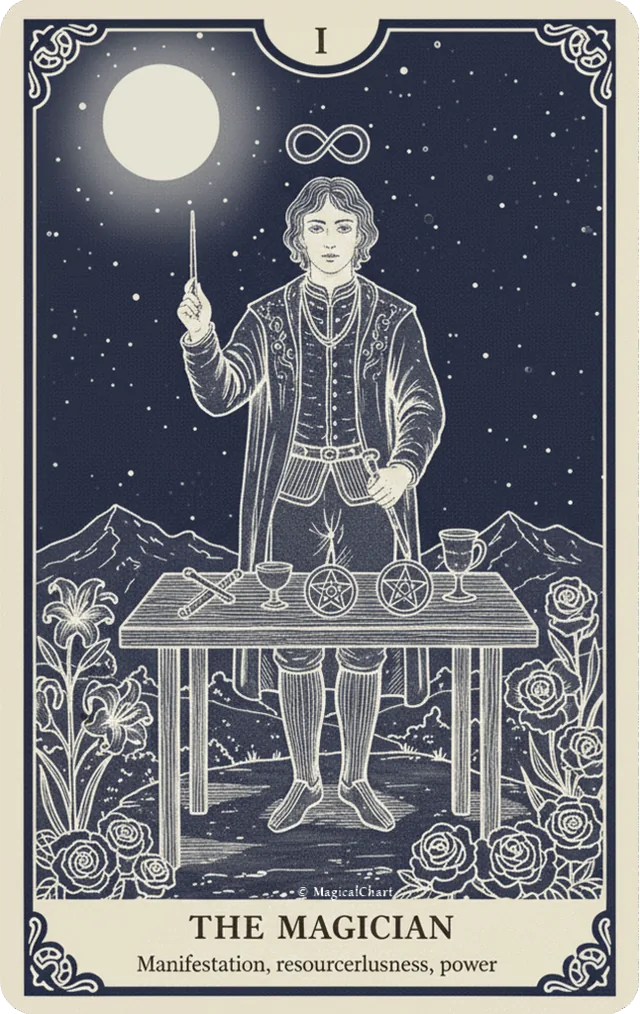
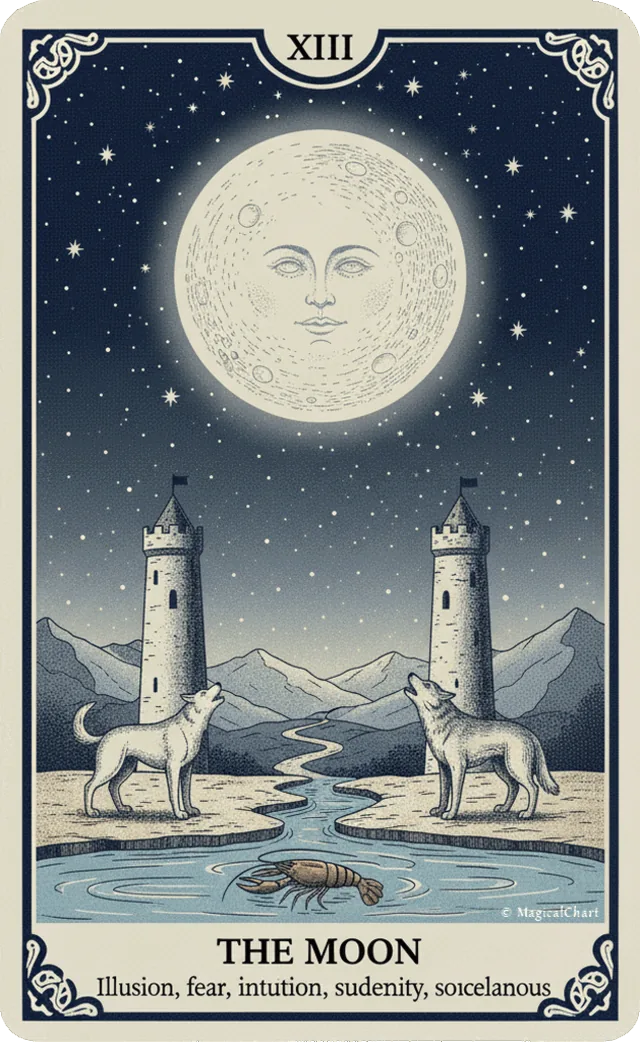
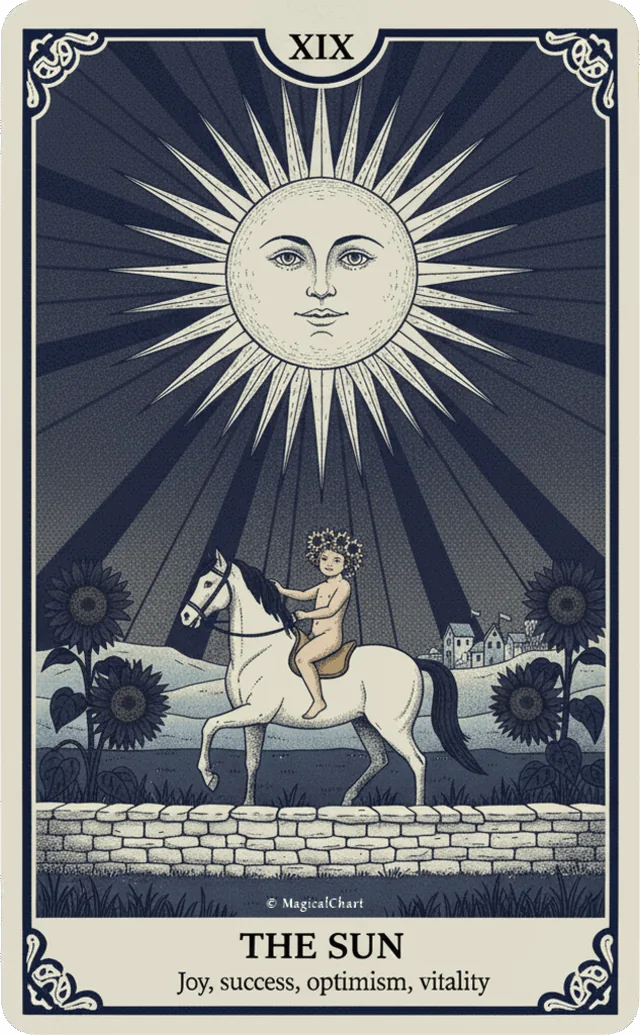
The Major Arcana represents the big themes of human experience — love, loss, transformation, power, fear, joy, death, rebirth. These are the cards that tend to carry the most weight in a reading. They include iconic figures like The Fool, The High Priestess, The Tower, The Star, and The World. When a Major Arcana card appears, it usually signals a significant moment or a theme that deserves your full attention.
→ Explore all 22 Major Arcana cards & their meanings
The Minor Arcana — 56 cards
The Minor Arcana represents the everyday situations, emotions, and decisions that make up daily life. It is divided into four suits, each associated with a different area of experience:
Wands
Passion, creativity, ambition, energy, career, inspiration. The fire within you.
Cups
Emotions, relationships, intuition, love, dreams, the inner world.
Swords
Thoughts, conflict, truth, communication, challenge, mental clarity.
Pentacles
Money, work, the body, stability, material life, long-term security.
Each suit has 14 cards: Ace through Ten, plus four Court cards — Page, Knight, Queen, and King. You do not need to memorise all 56 before you start. The suits alone will guide you a long way.
Do I need to memorise all 78 card meanings before I start?
No — and trying to do so before your first reading is one of the most common mistakes beginners make. It turns tarot into a memory test instead of an intuitive practice.
The better approach is to start with a simple 3-card spread and a beginner reference guide (or a tool like Magical Chart, which gives you the meaning with every card draw). As you read more, the meanings become less something you remember and more something you feel. Most experienced readers would say they learned tarot by doing readings, not by studying.
Start before you feel ready. That's the secret every experienced reader knows. The cards will teach you — but only if you actually draw them. 🐑
Try drawing your first 3 cards now — Magical Chart shows you the meaning of each card as it appears.
Draw my 3 cards — free ✦How to do your first tarot reading
Your first reading does not need to be complicated. Here is the simplest way to begin:
- Choose a question. It can be about anything — a situation you're facing, a decision you're weighing, or simply "what do I need to know today?" Open questions work better than yes/no questions for a first reading.
- Draw one or three cards. A single card is perfectly valid. A 3-card spread (past / present / future, or situation / obstacle / advice) gives you more to work with.
- Look at the image before you read the meaning. Notice what you feel. What stands out? What do you like or dislike about the card? Your first reaction is often the most accurate one.
- Read the card's meaning. Then ask yourself: how does this relate to my question or my life right now? The connection doesn't always appear immediately — sometimes it takes a day.
- Write it down. Keeping a simple tarot journal dramatically accelerates your learning. Even one sentence per card is enough.
That's all. There is no right or wrong way to receive the cards. The most important thing is that you show up with an honest question and an open mind.
What does a reversed tarot card mean?
A reversed card — one that appears upside down when drawn — generally carries one of these meanings:
- Blocked energy: The qualities of the card are present but obstructed. Something is preventing the natural expression of this energy.
- Internal rather than external: The energy is turned inward. It's something happening inside you rather than in your external situation.
- The shadow side: The less healthy or more challenging expression of what this card normally represents.
- Delayed or weakened: The card's energy is coming, but more slowly or with less force than usual.
Many beginners choose not to use reversals at all — and this is a completely valid choice. You can read every card upright until you feel comfortable, and only introduce reversals when you're ready. Tarot is flexible. There are no rules that cannot be adapted to your practice.
How to start a daily tarot practice
A daily practice is the single most effective way to learn tarot quickly — and it doesn't need to take more than five minutes.
The simplest version: draw one card each morning. Read its meaning briefly. Then go about your day, and notice where that card's energy shows up — in a conversation, a decision, a feeling, a moment. In the evening, write one sentence in a journal about what you noticed.
After 30 days of this, you will know the 78 cards better than someone who spent a month reading about them. The difference is lived experience.
Some people prefer drawing a card at night instead, as a way to reflect on the day that just passed. Others draw a card before a specific situation — a difficult conversation, a work decision, a creative project. There is no wrong time. The practice shapes itself around your life.
Don't wait for the perfect deck, the perfect altar, the perfect moment of calm. Draw a card right now, wherever you are. That's how every real practice begins. 🐑✦
Frequently asked questions about tarot
Do I need my own tarot deck to learn?
No — you can absolutely begin with a digital tarot tool like Magical Chart while you explore which deck resonates with you. That said, having a physical deck you love does add something to the practice. The Rider-Waite-Smith deck is the most recommended for beginners because its imagery is the most widely documented and explained.
Can anyone read tarot, or do you need a gift?
Anyone can read tarot. There is no special gift required — only curiosity, a willingness to reflect, and a little patience with yourself as you learn. Many people who consider themselves "not intuitive" discover through tarot that they are far more perceptive than they knew.
Is tarot dangerous or against any religion?
Tarot is a tool for self-reflection. It is not connected to any religion, and it is not dangerous. Many people of various faiths use tarot simply as a way to think more deeply about their lives. How you use it is entirely up to you.
How accurate is tarot?
The question of accuracy is tricky because tarot is not designed to give literal predictions. What tarot is very good at is surfacing what you already sense but haven't yet articulated — and that tends to feel remarkably accurate to the people who practice it consistently.
What is the best tarot spread for beginners?
The 3-card spread is the most versatile and beginner-friendly spread in tarot. The three positions can represent past / present / future, situation / obstacle / advice, or mind / body / spirit. It gives you enough to work with without becoming overwhelming.
Try your first reading now ✦
Draw 3 cards and discover what the tarot has to say about your past, present and what is unfolding. Free, no account needed.
🔮 Start free readingFree · No account needed · Meet Wooly 🐑